
Morocco has long captivated adventurers with its extraordinary diversity of landscapes, from windswept Atlantic coastlines to the towering peaks of the High Atlas and the seemingly endless expanses of the Sahara. For those seeking an immersive experience that combines thrilling riding with profound cultural encounters, a morocco motorcycle tour offers an unparalleled opportunity to explore this North African gem on two wheels. Riders traverse winding mountain roads, navigate ancient caravan routes, and discover hidden valleys where Berber traditions have endured for centuries, all while experiencing the raw beauty of terrain that shifts dramatically from lush oases to arid desert plains.
- Morocco offers a diverse motorcycling experience, ranging from the rugged High Atlas mountain passes to the vast, arid landscapes of the Sahara desert.
- The Erg Chebbi dunes near Merzouga provide an iconic desert riding destination, featuring shifting sands and traditional Berber cultural encounters.
- Successful desert navigation requires essential off-road skills, including proper throttle control and the ability to read unpredictable terrain.
- Riders must prioritize safety by maintaining hydration, using sun protection, and ensuring their motorcycles are mechanically prepared for sandy and rocky conditions.
- Adventure motorcycles with robust suspension and high ground clearance, such as various KTM and BMW models, are ideal for the challenging Moroccan terrain.
- The Atlas Mountains offer dramatic high-altitude riding, with famous routes like the Tizi n’Tichka pass providing steep gradients and spectacular landscape transitions.
Traversing Morocco’s Legendary Desert Routes by Motorcycle
The allure of Morocco’s desert landscapes lies not only in their stark beauty but also in the sense of freedom they inspire. Riding through these vast open spaces, where horizons stretch endlessly and silence is broken only by the rumble of an engine, creates a connection between rider and environment that few other experiences can match. The journey through Morocco’s desert regions reveals layers of history, from ancient kasbahs standing sentinel over forgotten trading posts to modern settlements that have adapted to the harsh realities of desert life while maintaining their cultural identity.
The Erg Chebbi Dunes: Riding Through Saharan Splendour
Among the most iconic destinations on any morocco motorcycle tour is Merzouga, gateway to the magnificent Erg Chebbi dunes. These towering sand formations rise up to one hundred and fifty metres above the surrounding desert floor, creating a dramatic landscape that shifts colour throughout the day as sunlight plays across their rippled surfaces. Riding toward Merzouga offers a gradual transition from rocky desert tracks to the softer terrain that borders the erg itself, where the challenge shifts from navigating stones and washboard surfaces to managing the unique dynamics of sand riding. The village of Merzouga serves as a natural staging point, where riders can pause at traditional auberges before venturing into the dunes themselves or continuing along routes that skirt the sand sea, offering spectacular views without requiring deep sand navigation skills.
The experience of riding near these dunes extends beyond the physical challenge. The cultural encounters along the way, including visits to Berber communities whose ancestors have inhabited these regions for generations, provide context and depth to the journey. Evening camps near the dunes, where traditional music drifts across the desert air and the night sky reveals constellations with a clarity impossible in urban environments, create memories that linger long after the tour concludes. These moments of stillness, balanced against the exhilaration of daytime riding, define the essence of desert exploration by motorcycle.
Desert Navigation Skills and Essential Safety Considerations
Successfully navigating Morocco’s desert trails requires more than simply following a GPS track. The terrain demands specific skills, particularly for those sections involving gravel riding or softer surfaces where traction becomes unpredictable. Riders undertaking these routes should possess previous off-road experience, though expert-level abilities are not necessary. The key lies in understanding how to read the terrain ahead, adjusting speed and line choice accordingly, and maintaining the balance and throttle control that prevent the motorcycle from bogging down in softer patches. Tour operators typically provide pre-departure briefings that cover these techniques, ensuring all participants understand the fundamental principles of desert riding before setting out.
Safety in the desert environment also extends to practical considerations such as hydration, sun protection, and mechanical preparation. The dry air and intense sunlight can quickly lead to dehydration, making regular water intake essential even when the riding pace feels comfortable. Motorcycles themselves must be prepared for the demands of desert conditions, with air filters checked frequently to prevent fine sand particles from compromising engine performance. Modern adventure motorcycles such as the KTM 890 ADV, KTM 790 ADV, BMW 1250 GS, and BMW R 12 GS are specifically designed to handle these conditions, offering robust suspension, effective cooling systems, and the ground clearance necessary for rocky sections. Riders benefit from understanding their chosen machine’s capabilities and limitations, adjusting their riding style to work with the motorcycle rather than against it.
Conquering the Atlas Mountains on Two Wheels
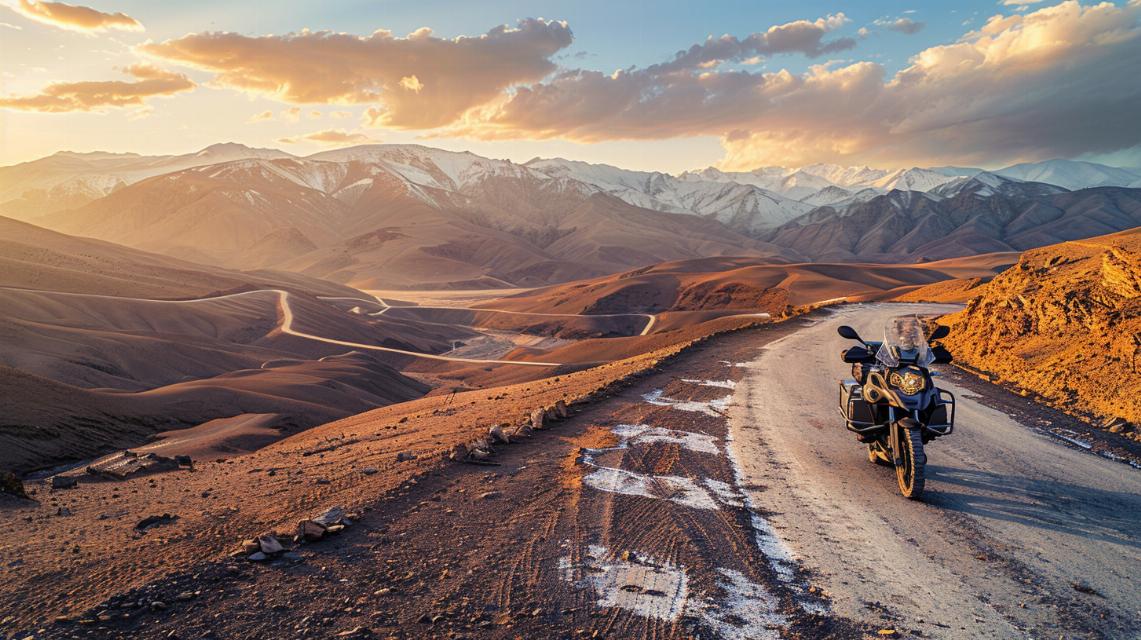
If the desert represents Morocco’s horizontal expanse, the Atlas Mountains provide its vertical dimension. These ranges, which stretch across the country from the Atlantic coast toward Algeria, create dramatic barriers that have shaped Morocco’s history, climate, and cultural divisions. For motorcycle enthusiasts, the Atlas Mountains offer some of the most rewarding riding anywhere in North Africa, with roads that climb through valleys dotted with walnut groves and terraced fields before ascending to high passes where snow can linger well into spring. The contrast between the warmth of the lowlands and the crisp air at altitude creates distinct riding zones, each with its own character and challenges.
The Tizi n’Tichka Pass: Morocco’s Most Dramatic Mountain Road
The Tizi n’Tichka Pass stands as perhaps the most famous of Morocco’s mountain crossings, linking Marrakech with the desert regions beyond. This route climbs to an altitude of more than two thousand metres, winding through landscapes that transition from red earth foothills to limestone cliffs and finally to the bare rock of the high mountains. The road itself, though paved for much of its length, demands respect. Corners tighten unexpectedly, gradients steepen without warning, and local traffic including heavily laden trucks and itinerant vendors adds an element of unpredictability. Yet these challenges only enhance the satisfaction of reaching the pass summit, where panoramic views extend across multiple valleys and the sense of accomplishment is palpable.
Along the Tizi n’Tichka route, riders encounter reminders of Morocco’s rich heritage. The UNESCO-listed kasbah of Aït Ben Haddou, though requiring a slight detour from the main pass road, represents one of the finest examples of southern Moroccan architecture. This fortified village, with its earth buildings rising in tiers against a hillside, has served as the backdrop for numerous films yet retains its authenticity and connection to the past. Pausing here allows riders to stretch muscles stiffened by mountain curves whilst immersing themselves in the architectural and cultural traditions that define this region. Such stops transform a motorcycle tour from mere physical journey into cultural exploration, connecting modern adventure travel with centuries of history.
Riding Techniques for High-Altitude Mountain Passes
Mountain riding in Morocco requires techniques distinct from those employed in desert sections. The combination of elevation changes, varying surface conditions, and exposure to weather shifts demands adaptability and focused attention. Riders must master the art of selecting appropriate gears for sustained climbs, managing engine braking on descents, and positioning themselves correctly through sequences of hairpin bends. Vision becomes paramount in mountain environments, where looking through corners rather than at immediate obstacles allows smoother lines and better anticipation of upcoming challenges. Weight distribution also plays a crucial role, with subtle shifts of body position helping to maintain traction on surfaces that may be damp from mountain streams or scattered with loose gravel.
The psychological aspects of mountain riding deserve equal consideration. Some passes feature significant exposure, with steep drop-offs visible on the outside of certain corners. Maintaining focus on the riding line rather than fixating on these drops helps prevent the tension that can lead to rigid inputs and compromised control. Many riders find that adopting a rhythm, matching breathing to the flow of corners, helps maintain the relaxed concentration that characterises skilled mountain riding. Tour operators typically structure itineraries to allow gradual acclimatisation, beginning with less demanding mountain routes before progressing to challenges such as the Tizi n’Tichka. This approach builds confidence whilst allowing riders to develop the specific skills that make high-altitude passes not merely survivable but genuinely enjoyable. The combination of technical challenge and spectacular scenery explains why the Atlas Mountains have become essential components of comprehensive Morocco motorcycle tours, offering experiences that complement and contrast with the desert sections to create truly memorable adventures.